
This is a wooden overall type of bee feeder that is the same principle as the Miller feeder, but has the feeding station situated along one edge, it is a bottom bee space type of feeder. The design of this type is attributed to Harrison Ashforth. The main feed reservoir is all in one piece and this particular version is suitable for the bottom bee space, B.S. National type of bee hive.
One of the objectives in this design is to allow the feeding station to be positioned at the side of the hive that is lowest, so that gravity drains all the feed to where the bees can deal with it. It is slightly more simple than the Miller and is thus slightly cheaper to manufacture. I have used both types together and there is no noticeable difference in performance.
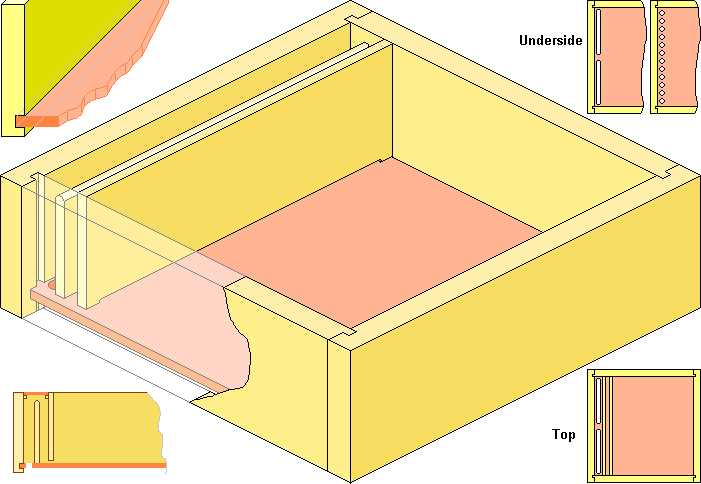
The oblique Drawing above shows the basic layout of a feeder to suit bottom bee space National hives, if you use top bee space then the 9 mm rim at the bottom is not needed and the plywood base will need to be the full size of 460 mm x 460 mm. The cover over the feeding station is omitted in the drawing for clarity.
Rowse Miller Feeder
Two alternative underside views are shown inset, the version that uses holes for bee access rather than slots is known as a "Rowse Miller", but is merely a modified Ashforth design by another name.