Chemical Treatments
Acarine Treatment

|
|
|---|
This product is not registered for use in the U.K.
|
Chemical Treatments Acarine Treatment |
This product is not registered for use in the U.K. Folbex VA |
|---|
General note on chemicals: I do not endorse or advise on chemical treatments, as I am not qualified to do so and there may be dangers beyond my control. New products may be introduced or existing ones withdrawn, so it is difficult to keep up with current information on a website such as this. As many of the chemical pages were generated by Dave Cushman, I am leaving the content mainly as left by Dave for historical purposes only, which may mean information is out of date and unreliable. The user should seek guidance from other sources and satisfy themselves regarding safety and legality. Roger Patterson.
Manufactured By:-
Ciba-Geigy Agrochemicals, Whittlesford, Cambridge CB2 4QT. Tel: Cambridge (0223) 833621
®Registered trade mark of CIBA-GEIGY Limited, Basle, Switzerland.
Data Sheet Ref... EL943502/0504X
Date of Issue of Data... 1985
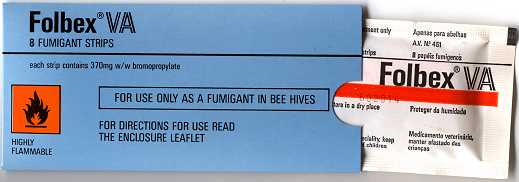
| The outer pack contains three of these slip cases that each contain a sachet of eight fumigation strips. |
|---|
|
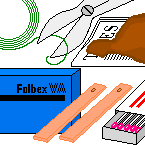
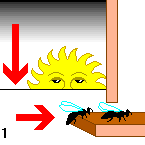
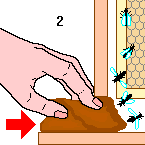
Fumigant strips for the diagnosis and control of honey bee mites. | The diagrams have been prepared to mimic the original black and white ones. |
|---|---|
|
General Information
Uses
|
|
|
DIRECTIONS FOR USE
|
|
|
|
|
|
|
|
|
Acarine disease
|
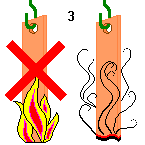
|
|
Dose
|
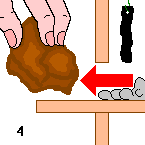
|
|
Varroa disease:- Diagnosis and Treatment
|
|
|
Timing
Dose
|
|
|
Diagnosis of varroa disease:
Control of varroa disease:
|
|
Method of Application... As described above under Acarine disease.
WARNINGS
Bees should not be treated during the main nectar flow.
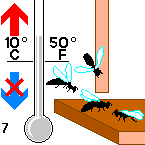
Treatment should not be carried out when there is a risk of night frost or if the outside temperature is below 10° C (50° F) - Fig. 7
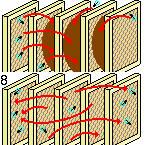
Bees should not be treated when they are tightly clustered in winter - Fig. 8
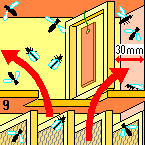
There must be sufficient room for the bees to space out - Fig. 9
This product is cleared under the UK Government's Pesticides Safety Precautions Scheme for use as directed.
| HIGHLY FLAMMABLE |
|---|
|
FOR USE ONLY AS A |

PRECAUTIONS
WASH HANDS before meals and after work.
KEEP OUT OF REACH OF CHILDREN.
DANGEROUS TO FISH. Do not contaminate ponds, waterways or ditches with chemical or used container.
STORE IN ORIGINAL CONTAINER, tightly closed, in a safe place.
DISPOSE OF USED PACKAGING SAFELY.
I neither endorse nor condemn this product. The information as published here is a matter of public record. The information is placed here for the education of those that wish to read it.
BEFORE you obtain or use the material concerned please ascertain the legality of doing so in your location as the product may or may not be approved in your geographic State or Country.
At the date of writing this webpage, this product was not licenced in UK or available from the appliance trade.
Dave Cushman.
Originally written by Dave Cushman. Edited and additions by Roger Patterson.
Page created pre-2011
Page updated 12/12/2022
|