Mortice and tenon, dowels and pegs are traditional methods of joinery. With the advent of the use of organic acids, by some beekeepers, these methods need reappraisal as the acids are very corrosive to metal fasteners and metal hive parts.
The square peg in a round hole
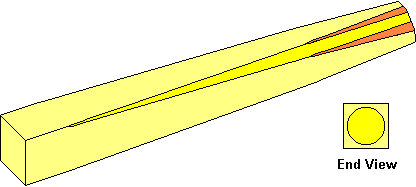
This old cliche is almost true in my case! If I drill a dowel hole at 6 mm diameter I will make a peg from material that is 7 mm square. I will shave it down in a progressive fashion from 7 mm square to roughly 6 mm round. This tapered peg is then glued and hammered into place, It will enter as far as it needs to go to get a good grip, the square end acts like the head of a nail or screw. After 24 hours for the glue to set the protruding ends are trimmed off using a Gent saw. If this sort of peg is used in a 'blind' hole, I make the hole deeper than required and cut a pressure relief groove along the length of the peg using a 'V' shaped graver.
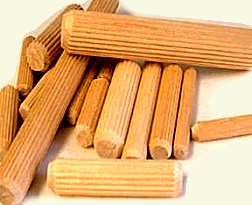
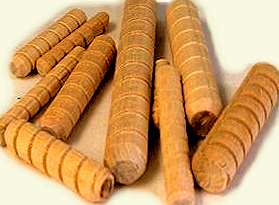
There are proprietary hardwood dowels... These are known as glue pins in the USA and they have straight grooved and spiral grooved types.

Sold in DIY and woodworking shops in the UK, they are available in 6 mm, 8 mm and 10 mm diameters, they have parallel grooves along their length in a splined fashion, which allows the glue to escape (otherwise the dowel pops out... As it acts like a piston in a cylinder). Various jigs and gadgets are available to enable these dowels to be used accurately and repeatedly.